Today’s water heater options make it easy to install a system that perfectly matches your household’s hot water demand and monthly energy budget. You can go with a tank setup that stores a large volume of preheated water or a tankless model that heats water on demand. Taking time to understand the pros and cons of each option is a key part of selecting the most cost-effective solution for your home.
How Do Tank Water Heaters Work?
With regular water heaters, cold water comes into a storage tank through a dip tube. Then, a gas burner or electrical elements heat the cold water to a set temperature, usually about 120 degrees Fahrenheit. The heated water sits in the tank until it’s ready for use. Once the tank runs out of hot water, the recovery process begins. It can take anywhere from 20 to 40 minutes for the tank to refill and get the water hot.
Pro: Reduced Initial Setup Expense
A lot of homeowners opt for tank-style water heaters because of their lower upfront cost. The unit itself is not only cheaper, but the installation process is significantly less complex. In fact, most tank water heaters are about 40% to 60% cheaper than tankless conversions.
Pro: Simpler and More Affordable Fixes
The parts on standard water heaters have remained largely unchanged over the past several decades. This makes it easier to find affordable replacement components and perform quick repairs when a part wears out or the unit breaks down. There’s no need to replace complex computer boards or modulated burners.
Pro: Integrates With Standard Household Piping
There’s a good chance your home already has the infrastructure in place to install a tank water heater. We probably won’t have to resize your gas lines or upgrade the electrical panel for high-amperage draws. We’ll simply remove the old water heater and install a new one without making major modifications.
Pro: Reliable Performance at Low PSI
The storage tank on your water heater uses the home’s water pressure to push hot water through the pipes. With a tankless unit, the water pressure must remain consistently high to trigger the heating sensors. Regular water heaters don’t need this minimum flow rate to supply hot water. This can prove especially beneficial when your home resides in an area with fluctuating municipal pressure.
Con: Limited Hot Water Supply
One of the most frustrating parts of owning a tank water heater is that, once the tank runs out, you have to wait for it to fill back up and heat the water. You may find yourself having to stagger your household chores when you’re doing several loads of laundry or bathing multiple children back-to-back. The good news is that you can always choose a larger tank to take advantage of a higher first-hour rating and increased storage capacity. Still, this downside of tank water heaters can be particularly disruptive for growing families with high peak-hour demands.
Con: Higher Standby Energy Loss
Tank water heaters are constantly radiating heat through the tank walls. Their burner or heating elements cycle on and off periodically to keep the water hot. The standby energy loss that occurs may result in higher monthly utility bills.
Con: Risk of Tank Leaks
You also have to worry about tank leaks with tank-style water heaters. Most leaks happen at the base of the tank because of internal sediment buildup or corrosion. Even minor cracks in the glass-lined inner tank can flood the nearby area and cause significant water damage to the flooring and drywall.
Con: Heavier and Harder to Move
Water heaters with tanks take up a substantial amount of floor space and typically weigh up to 500 pounds or more when they’re full of water. The bulky equipment is difficult to move and may create issues with structural weight limits or accessibility in tight utility closets.
How Do Tankless Water Heaters Work?
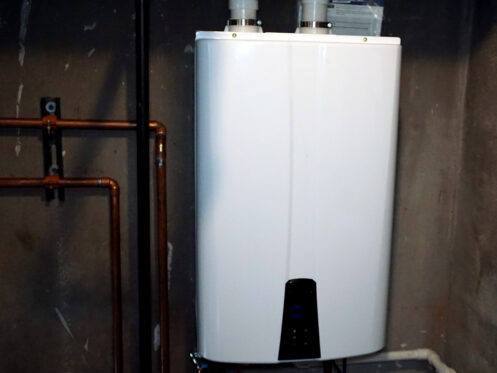
Tankless water heaters are just as the name implies; they don’t feature storage tanks. Instead, they heat water on demand. Every time you turn on the hot water, it sends a signal to the unit’s internal flow sensor, which immediately ignites the gas burner or activates the electric heating elements.
Pro: Endless Hot Water on Demand
Since tankless styles heat water on demand, you have a virtually endless supply of hot water. You’ll find it easy to continue with back-to-back showers and multiple loads of laundry without sudden temperature drops that come from an empty tank.
Pro: Better Energy Performance
Tankless water heaters don’t have standby heat loss because they don’t store heated water in a tank. Many versions are up to 24% to 34% more energy efficient than traditional storage-tank models in homes that use roughly 41 gallons of water a day. This enhanced efficiency translates into more affordable operating costs.
Pro: Longer System Lifespan
A water heater with a tank normally lasts anywhere from 8 to 12 years. Tankless versions, on the other hand, often last 20 years or longer.
Pro: Reduced Risk of Leaks
When you go tankless, your home won’t have a 40- to 60-gallon metal tank full of water sitting inside it. If the heat exchanger or internal piping were to leak, it would be much less damaging than a massive tank failure.
Con: Higher Upfront Installation Cost
Most homeowners who opt not to go tankless do so because of financial constraints or the higher upfront investment. Tankless versions cost about two to three times as much as tank styles.
Con: May Require Electrical or Gas Upgrades
In a lot of homes, we have to retrofit gas lines or upgrade the electrical panel to set up the new high-demand heating system. These infrastructure changes add to the time and cost of the installation.
Con: May Struggle During Peak Demand
Tankless units do keep hot water accessible around the clock, but they may hit their limit if you’re trying to run too many fixtures at once. This is because tankless styles have a maximum flow rate. They can only heat so many gallons per minute (GPM). If you run multiple hot water appliances at the same time, you might notice a significant drop in water temperature or pressure.
Con: Performance Depends on Incoming Water Temperature
The temperature of the water coming into your home directly impacts how long it takes a tankless unit to heat it. During cold snaps in North Texas, the lower temperature can add to the heating duration or reduce the available flow rate.
Get Expert Help to Choose the Right Water Heater for Your Home
When you’re making the choice between a tank versus a tankless water heater, it mostly comes down to your hot water needs and financial goals. Both types offer monetary advantages: tankless styles have lower operating costs, while tank versions cost less upfront. If your decision depends on the amount of available space you have for the equipment, we’ll suggest going tankless. We’re pros at helping homeowners modernize their plumbing with expert water heater solutions.
Contact Honest Home Services LLC today to schedule water heater installation services in Flower Mound, TX.