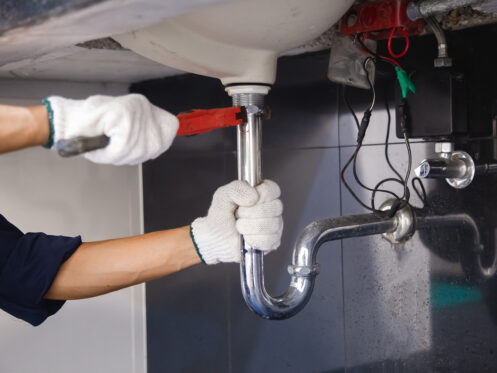
There are few things more unsettling for a homeowner than the foul, unmistakable smell of sewer gas inside the house. If you’ve noticed this unpleasant odor creeping into your home as the seasons change, you’re not alone. Sewer odors often become more prominent in the fall. This is often due to shifts in weather, indoor air pressure, and changes in plumbing usage patterns as it gets colder.
Why Sewer Odors Become More Noticeable in the Fall
As the Texas heat gives way to cooler autumn air, we change our habits. We close our windows and doors to keep the warmth in, effectively sealing our homes. While this makes our living spaces cozy, it also significantly impacts indoor air pressure and ventilation. With less air movement, smells that might otherwise dissipate can become trapped.
How Negative Air Pressure Can Pull Sewer Odors Indoors
One of the most common but least understood culprits behind fall sewer smells is negative air pressure. This happens when more air leaves your home than comes in. When you run bathroom exhaust fans, your clothes dryer, or the stove’s vent hood, you actively push air outside.
In a tightly sealed home, this creates a slight vacuum effect. The house will try to pull in “makeup” air from wherever it can to equalize the pressure. Unfortunately, one of the easiest entry points is your plumbing system. A dry P-trap, cracked pipe, or faulty plumbing seal can let smelly sewer gas escape and enter your living space.
Common Sources of Sewer Smells Inside the Home
Sewer odors are a symptom, and the underlying cause can vary widely. Diagnosing the issue involves checking several key components of your plumbing system.
- Dry P-traps from unused drains
- Clogged drains with decaying debris
- Cracked or broken drain lines
- Blocked plumbing vents on the roof
- Failed or loose toilet wax rings
- Damaged main sewer line
When the Problem Starts at a Drain
If you notice the sewer smell is concentrated in one specific area, the problem often lies with that particular drain or fixture. This often happens with P-traps that have dried out from infrequent use. Running water through that drain for a minute or two can sometimes refill the trap and resolve the odor.
However, if the smell persists or is accompanied by slow draining, you might be dealing with a significant clog. Some clogs are simple, but others can be deep in the pipe and require professional tools to clear effectively. For stubborn issues, it’s always best to seek professional drain repair to avoid damaging your pipes.
Why Unused Drains and Floor Drains Often Smell First
Drains that don’t see daily action are the most susceptible to developing odors. Guest bathrooms that sit empty, utility sinks in the garage, or floor drains designed for overflow protection are prime examples. The water in their P-traps is exposed to air and will eventually evaporate. The drier air that can accompany the fall season in Texas can sometimes speed up this process.
Pouring a quart of water down these drains once a month can prevent the trap from drying out. If you’ve already done this and the smell returns quickly, it could indicate a more complex problem.
When Sewer Odors Point to a Sewer Line Issue
If the sewer smell seems to be present throughout the house, the problem may be with your main sewer line. This is also true if you notice the smell is stronger on the lowest levels of your home. Other red flags include gurgling sounds from your toilets, multiple slow-draining fixtures, or water backing up into your tub or shower when you flush a toilet.
These symptoms suggest a blockage, break, or collapse in the main line that carries your home’s wastewater away. This is a serious plumbing issue that requires immediate attention from qualified professional sewer services.
How Damaged Pipes or Loose Seals Let Odors Escape
Your home’s drain-waste-vent (DWV) system is designed to be airtight, except for the vents on your roof. Any breach in this system can allow sewer gas to escape. Over time, pipes can corrode or crack, and seals can degrade. A wobbly toilet is a classic sign that the wax ring at its base has failed, allowing gas to seep into your bathroom.
Finding these hidden leaks can be challenging, as the damaged pipe might be concealed within a wall or under your concrete slab foundation. A persistent, musty, or sewer-like smell without a clear source often points to this type of hidden problem. Addressing these issues may require expert pipe repair, to properly access and fix the breach.
How Professional Plumbing Service Finds the Source
Pinpointing the exact cause of a sewer odor isn’t a guessing game for a professional plumber. At Honest Home Services LLC, our team uses advanced diagnostic tools and techniques to accurately locate the source. We believe in honesty and transparency, which is why we show our customers exactly what we find.
Video camera inspection involves feeding a flexible, waterproof camera down your drain and sewer lines for a real-time look at their condition. This lets us spot cracks, root intrusion, or blockages without excavation. For tricky, hard-to-find leaks in the vent system, we may perform a smoke test using a non-toxic vapor. These professional plumbing services ensure we fix the right problem the first time.
Stop Sewer Odors at the Source With Honest Home Services LLC
A sewer smell in your home is a warning sign from your plumbing system that something is wrong. From simple fixes like a dry P-trap to complex sewer line breaks, the potential causes are numerous. Ignoring the problem won’t make it go away and could lead to more significant health and property risks.
We’re a family-owned company that has earned awards for our commitment to ethics. We pride ourselves on providing honest, effective solutions for our neighbors in Flower Mound. Our team is here 24/7 to diagnose and resolve any plumbing issue, big or small.
For reliable diagnosis and repair of sewer odors in your Flower Mound, TX home, contact Honest Home Services LLC.
FAQs
A sewer gas smell in your house is typically caused by a problem within your plumbing’s drainage system. Common causes include a dried-out P-trap, clogged drain, or blocked plumbing vent on your roof. It can also stem from a faulty toilet seal or a crack in your main sewer line.
Yes, the P-trap is designed to hold water, creating a barrier against sewer gas. If you don’t use the drain, the water evaporates. This breaks the seal and allows unpleasant and potentially harmful gases to enter your home.
It can be, because sewer gas is a mixture of gases, primarily hydrogen sulfide, which causes the rotten-egg smell. In low concentrations, it can cause symptoms like headaches, nausea, and dizziness. In high concentrations, it can be toxic. Address the source of any sewer odor promptly.
You should call a plumber if the odor is strong, persistent, or present in multiple areas of your home. If running water in all your drains doesn’t eliminate the smell, it’s time to bring in a professional for a diagnosis. A persistent sewer odor almost always indicates an underlying issue that requires expert attention.